GATE Blog
What is an AI employee, and what can it actually do?
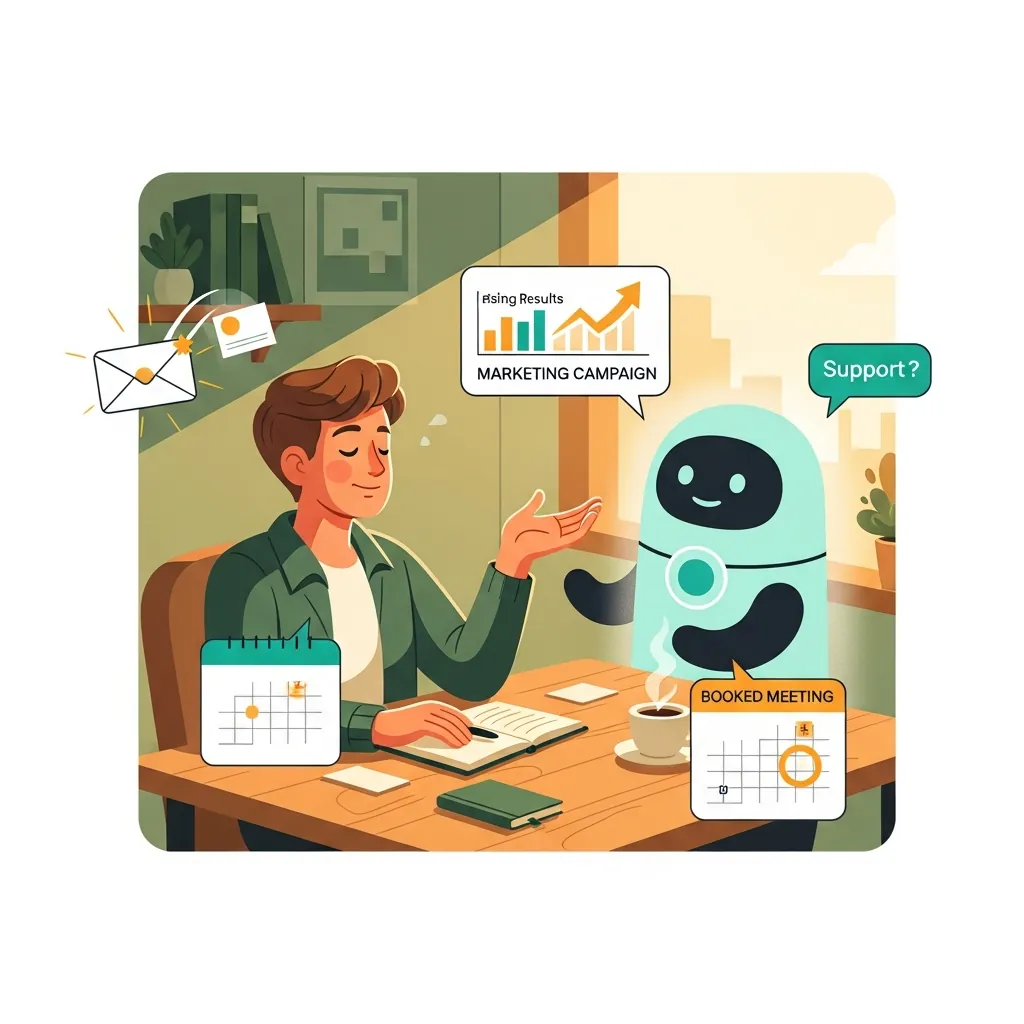
An AI employee is an AI agent that does a real job in your business from start to finish, not a chatbot that answers questions and waits. You brief it like you would brief a new hire, it does the work, and it hands back a finished result. The difference between the two is the difference between a tool you have to operate and a teammate who gets things done.
This piece explains what an AI employee actually is, what it can do for a small business today, and how you stay in control of one.
A chatbot answers. An AI employee does the work
Most “AI” you have used is a chatbot: you ask, it replies, and then nothing happens until you act on the reply. Useful, but it is still you doing the job. An AI employee is the opposite. You say “find me twenty good leads in this niche and start the outreach,” and it builds the list, writes the sequence, and runs it. You say “our top landing page is slow and converting badly, fix it,” and it ships the fix.
The work leaves your plate, not just the thinking about it. That is the whole point, and it is what makes an AI employee feel less like software and more like a hire.
What it can actually do for a small business
A small business rarely struggles for ideas. It struggles for hands. An AI employee gives you the hands, across the jobs you would otherwise have to hire for:
- Marketing: plan and run campaigns, not just draft a caption.
- Sales outreach: build the list, write the sequence, follow up, book the meeting.
- Content and SEO: write and publish in your voice, on the topics your buyers actually search.
- Customer support: answer the routine queue, escalate the rest, around the clock.
- Operations: the recurring busywork that quietly eats your week.
You do not have to adopt all of it at once. Most businesses start by pointing an AI employee at the one job that is hurting most, and grow from there.
What separates a real AI employee from a clever demo
Anything can look capable in a one-off demo. What makes an AI employee trustworthy enough to actually run your work is the boring infrastructure underneath:
- Memory. It remembers your business, your customers, your tone, and what was decided last month. A real hire gets better the longer they are with you; so should this. An AI employee without memory is just a chatbot with a costume on.
- It works as a team. Serious work is rarely one job. The strongest setups have specialists that hand off to each other and check each other’s work, instead of one model trying to do everything in a single conversation.
- It works around the clock. It does not clock off. Problems get handled overnight, and you get a summary in the morning.
- Every action is logged. You can see what it did and undo it. Autonomy without a record is a liability, not a feature.
- Your data stays put. For a European business, that means your customer data is handled on EU-based infrastructure and is never used to train models.
How you manage one
You do not write code or learn a system. You brief an AI employee in plain language, the way you would brief a person: here is what I want, here is what good looks like, here is what to avoid. It asks when it is unsure, and it leaves the final say with you on anything that matters. You are still the boss. You just stopped being the one doing all the work.
That is also the honest limit worth naming: an AI employee is at its best on clearly described, repeatable work. The clearer your brief, the better the output, exactly like with a new hire.
The shift for small businesses
For most of history, a team was something you could only afford once you were already winning. Hiring is slow, expensive, and risky for a small business, so the work that a bigger company would simply staff just does not get done. An AI employee changes the order of operations: you get the output of a team first, without the salaries, the recruiting, or the management, and you grow into the headcount later if you want it.
That is what GATE is built to give a small business: not a chatbot, but a team of AI agents that do the actual work, and that know your business so what they produce comes out on-brand every time. See what that looks like on AI for small business, or the specific jobs you can point it at on the solutions page.
Common questions
Is an AI employee the same as an AI chatbot?
No. A chatbot answers a question and then waits for you to act on the reply, so you are still the one doing the job. An AI employee does the job itself, from start to finish. You say find twenty good leads and start the outreach, and it builds the list, writes the sequence, and runs it.
What jobs can an AI employee do for a small business?
Real, repeatable work across the business: run a marketing campaign, build a sales list and handle the outreach and follow-ups, write and publish content in your voice, answer the routine support queue around the clock, and take the recurring busywork off your week. Most businesses start by pointing one at the single job that is hurting most, then grow from there.
Do I need to be technical to manage an AI employee?
No. You brief it in plain language, the way you would brief a new hire: here is what I want, here is what good looks like, here is what to avoid. There is no code to write and no system to learn, and it asks when it is unsure.
Does an AI employee work on its own, or do I stay in control?
You stay in control. It handles the work but checks in when it is unsure and leaves the final call to you on anything that matters. Every action it takes is logged, so you can see exactly what it did and undo it. You are still the boss, you just stopped doing all the work yourself.
Is my business data safe with an AI employee?
For a European business, your customer data is handled on EU-based infrastructure and is never used to train models. Every action is logged and reviewable, so the autonomy always comes with a record rather than a black box.
Want an AI team for your business?
GATE gives a business a team of AI agents that do the actual work, briefed in plain language and working around the clock. It is invite-only right now while we onboard a small number of businesses.