GATE Blog
From prompt engineering to agent teams: where working with AI is heading
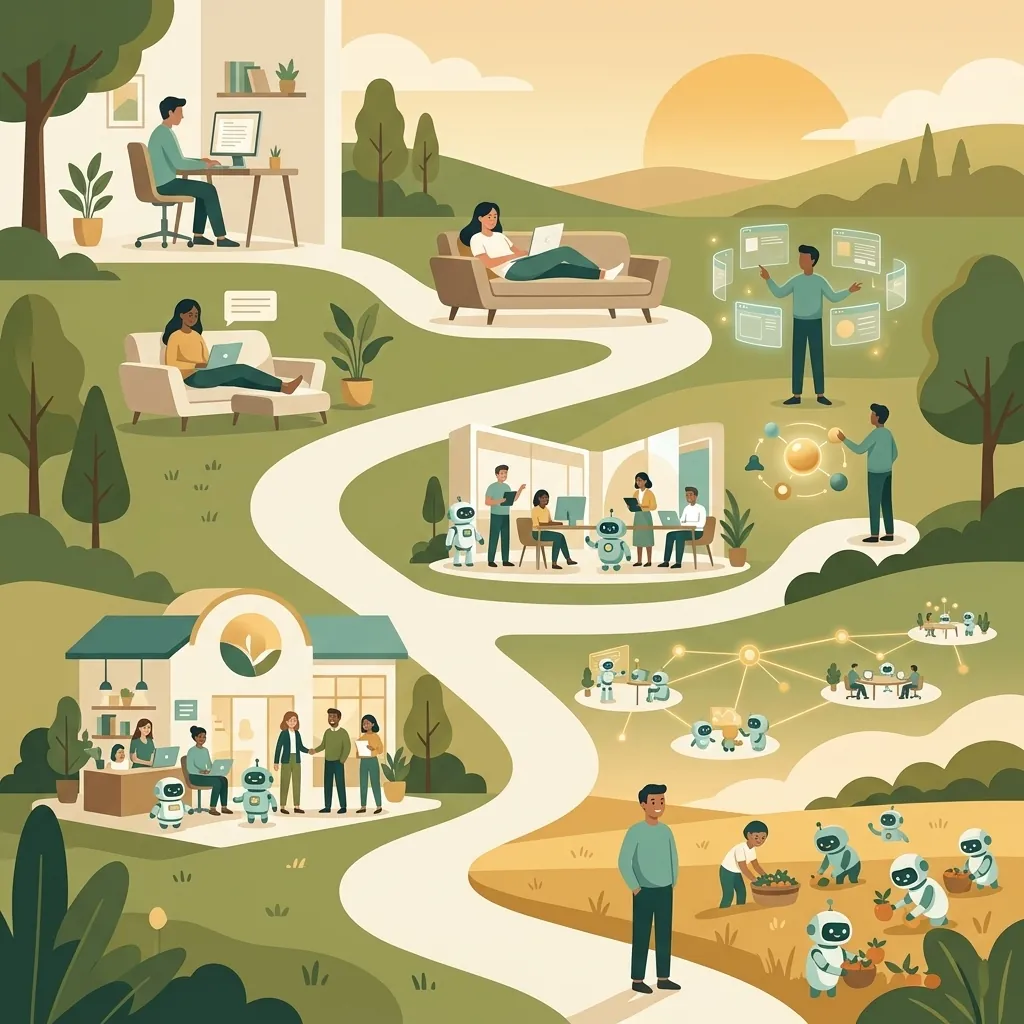
Two years ago, working with AI meant typing a really good prompt and hoping. Today it means briefing a team of agents and reviewing what they hand back. That shift, from operating the tool yourself to directing work that gets done for you, is the whole story of the last two years, and it is not slowing down. Here is the road as we see it, from typing prompts to an AI team you just point at the work.
The short history of working with AI
2024, the prompt engineer. One person at a desk, typing carefully worded prompts and iterating by hand. The skill was phrasing. Everything the AI did, you had to ask for, precisely, one turn at a time.
2025, the vibe coder. Laptop on your lap, a looser back and forth. You stopped hand-crafting every instruction and started describing what you wanted in plain language, letting the model fill in more of the how. Less typing, more describing.
2026, agentic engineering. Now you are not writing prompts, you are directing a few agents at once, each in its own window, each carrying a task. The work happens in parallel. Your job shifts from author to director.
2026.5, loop engineering. Instead of steering several agents by hand, you guide one coordinating agent that runs the loop for you: it plans, it delegates, it checks the work, and it comes back when it is stuck. You brief the top of the loop and it drives the rest.
2026.6, the intelligent multi-agent platform. This is where GATE is now. Not a single chatbot, and not a pile of disconnected bots, but a platform where briefed agents with memory coordinate as a team to run real work across a business: marketing, sales, support, finance, and more. You point it at a job and it does the job.
2026.7, supercharging the business. The same platform pointed not just at your own tasks but at your whole business and the people in it, so every person has the output of a team behind them. This is the part we are building toward right now.
2027, Fabric and agent-to-agent. Our bet for what comes next is Fabric: an agent-to-agent protocol where your agents talk directly to other people’s agents and get things done on your behalf, business to business, without a human relaying messages in between. Agents negotiating, booking, buying, and coordinating with other agents.
2028, you on the grass. The picture at the end of the road is a person standing in a field while their agents work for them and for their community. Less time operating software, more time deciding what actually matters. That is the direction, and it is why we are building GATE the way we are.
What actually changes
The through-line is simple: each step moves work off your plate. Prompt engineering was all you. Loop engineering and multi-agent platforms are mostly the agents, with you at the top setting direction and keeping the final say. The constant across every stage is that you stay in charge of what matters and hand off the rest.
The far end of this road is a bet, not a brochure. GATE today, at 2026.6, is real and running; Fabric and the 2028 picture are where we are pointed, not features you can switch on this afternoon. We would rather tell you where we are going and show you what already works than pretend the future has already shipped.
If you want the part that is real today, GATE gives a business a team of AI agents that do the actual work, briefed in plain language and working around the clock. That is what an AI employee already looks like. The rest of the road is what we get up for.
Common questions
What is an intelligent multi-agent application?
It is software where several AI agents, each briefed for a role and sharing memory, coordinate as a team to run real work end to end, rather than one chatbot answering one question at a time. GATE is built this way: you point a team of agents at a job like outreach or support and they do it.
What is agent-to-agent (a2a)?
Agent-to-agent is the idea that your AI agents can talk directly to other people's and other businesses' agents and get things done on your behalf, without a human relaying every message. It is the direction we are building toward with Fabric. Today GATE runs a team of agents inside your own business.
Is this available today, or is it a roadmap?
The multi-agent platform is real and running now: GATE gives a business a team of AI agents that do the actual work, briefed in plain language. The agent-to-agent network and the further-out vision are our roadmap, where we are pointed next, not features you can switch on today.
Want an AI team for your business?
GATE gives a business a team of AI agents that do the actual work, briefed in plain language and working around the clock. It is invite-only right now while we onboard a small number of businesses.