Alisa only spoke Russian. Now GATE makes her an English bedtime book every night.
A new picture book every night, a phrase for school, and a tutor in the family chat.
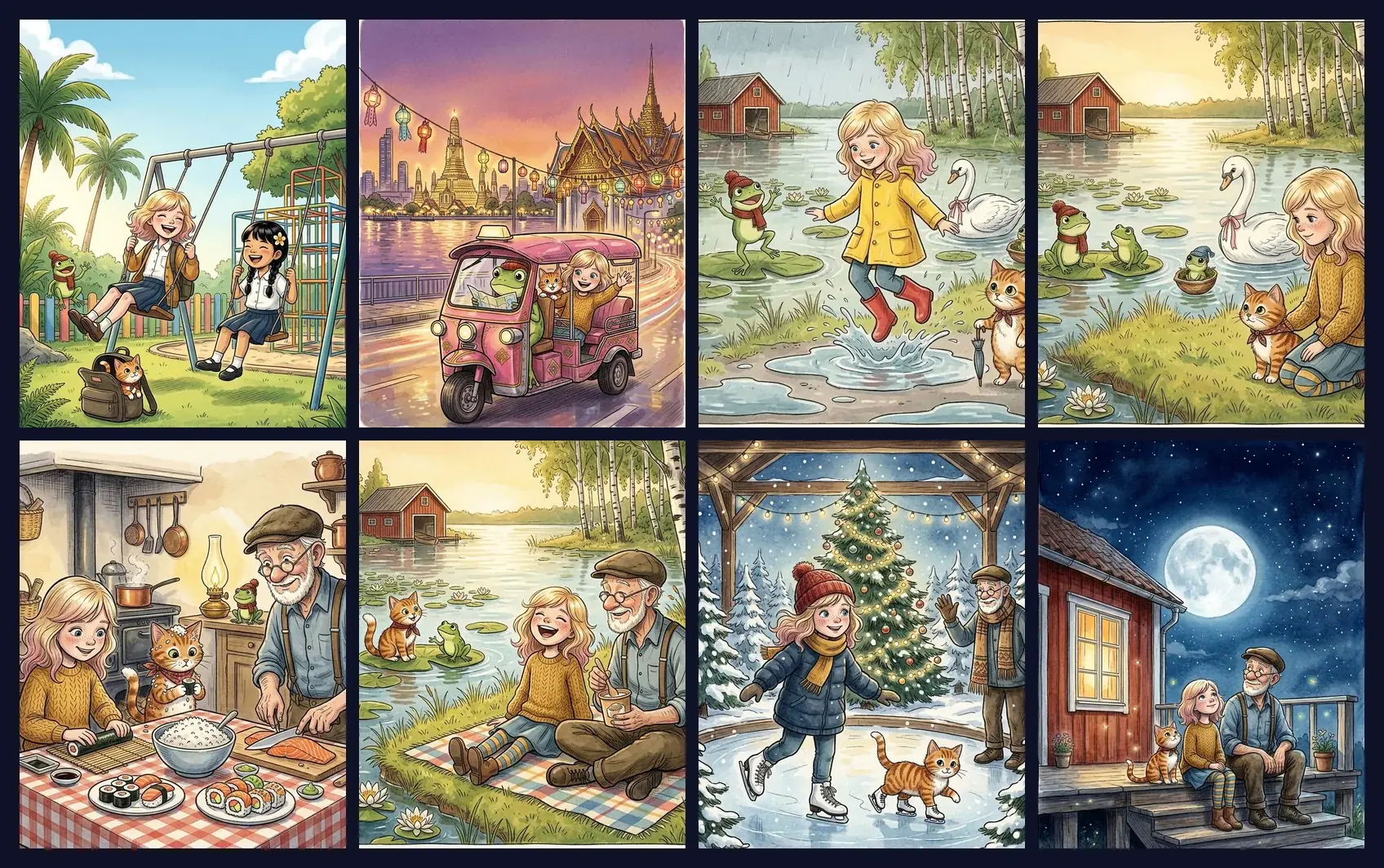
Alisa started at an English-speaking school in Bangkok knowing only Russian. Now she has a new picture book every night, in English, made just for her and with her in it. Molly, the AI assistant that runs on GATE, makes it from what happened that day, and teaches her in our family WhatsApp chat. I did not write a line of code or draw a single picture. This is how it works, and every part of GATE behind it.
It starts with what she loves
Alisa likes Findus and Pettson, so that is what I told Molly. Her first idea was a little word app: five words a night, a picture game and a short story. I asked for a real storybook instead.
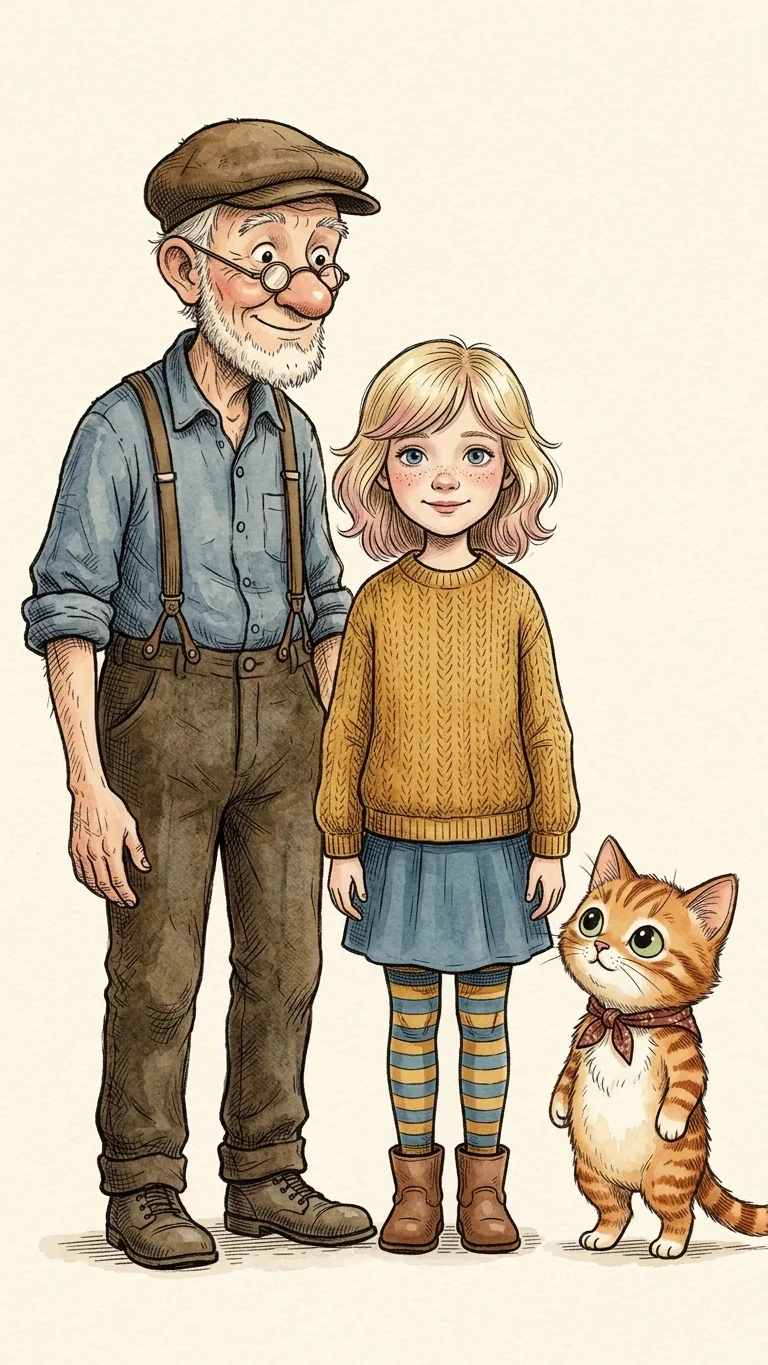
Molly made our own characters with the same cosy feel, so there is no copyright problem: Grandpa Olle, with his cap and round glasses, and Pip, a ginger kitten in a red neckerchief. I sent a photo of Alisa, and Molly drew her into the same pen-and-watercolour style: blonde hair, pink tips, freckles.
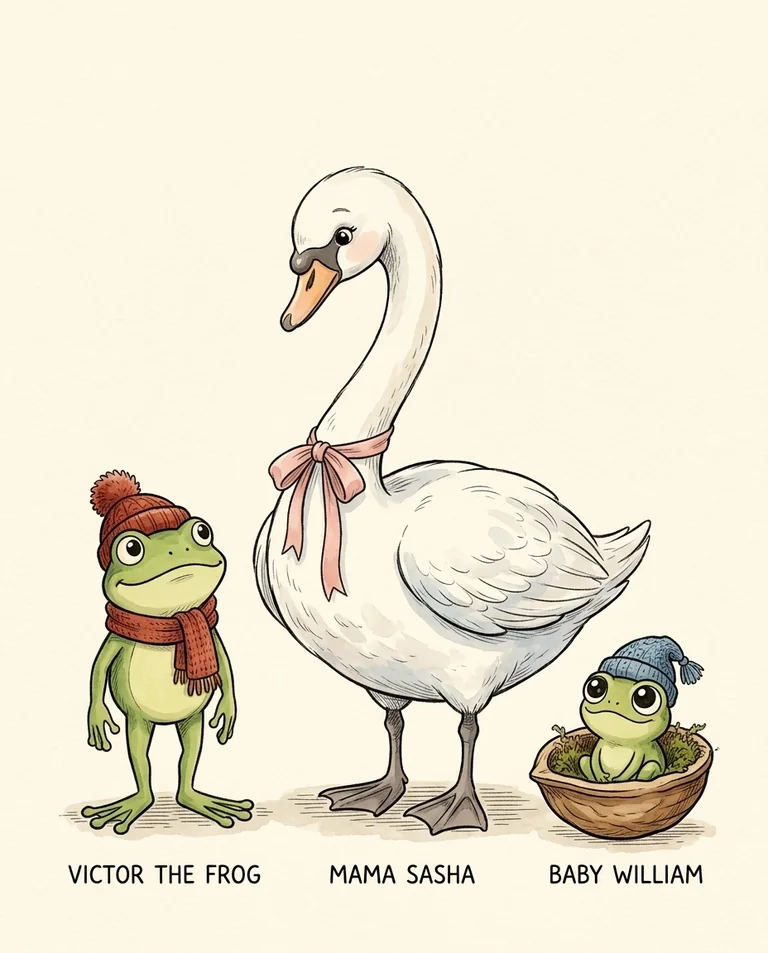
Then I asked for the family too. The frog with the red bobble hat is me, Victor the frog. Mama Sasha is a kind white swan with a pink ribbon. Alisa’s baby brother William is a tiny froglet in a blue knitted cap, asleep in a walnut-shell cradle.
Each cast is drawn once, on one sheet. That sheet is the model for every page Molly draws, so everyone looks the same in every book.
A book she reads on her phone
Every book is a web page with its own link, made for a phone. Each page has a picture, one or two easy English sentences and the Russian underneath.
- Listen reads the page aloud in English and lights up the words as it reads them.
- Tap any word to see it in Russian and hear it.
- RU hides the Russian when she wants to try on her own.
- Swipe to turn the page.
It is a bedtime book, so it is dark: stars twinkle, a shooting star flies past now and then, and the background colour changes with every page.
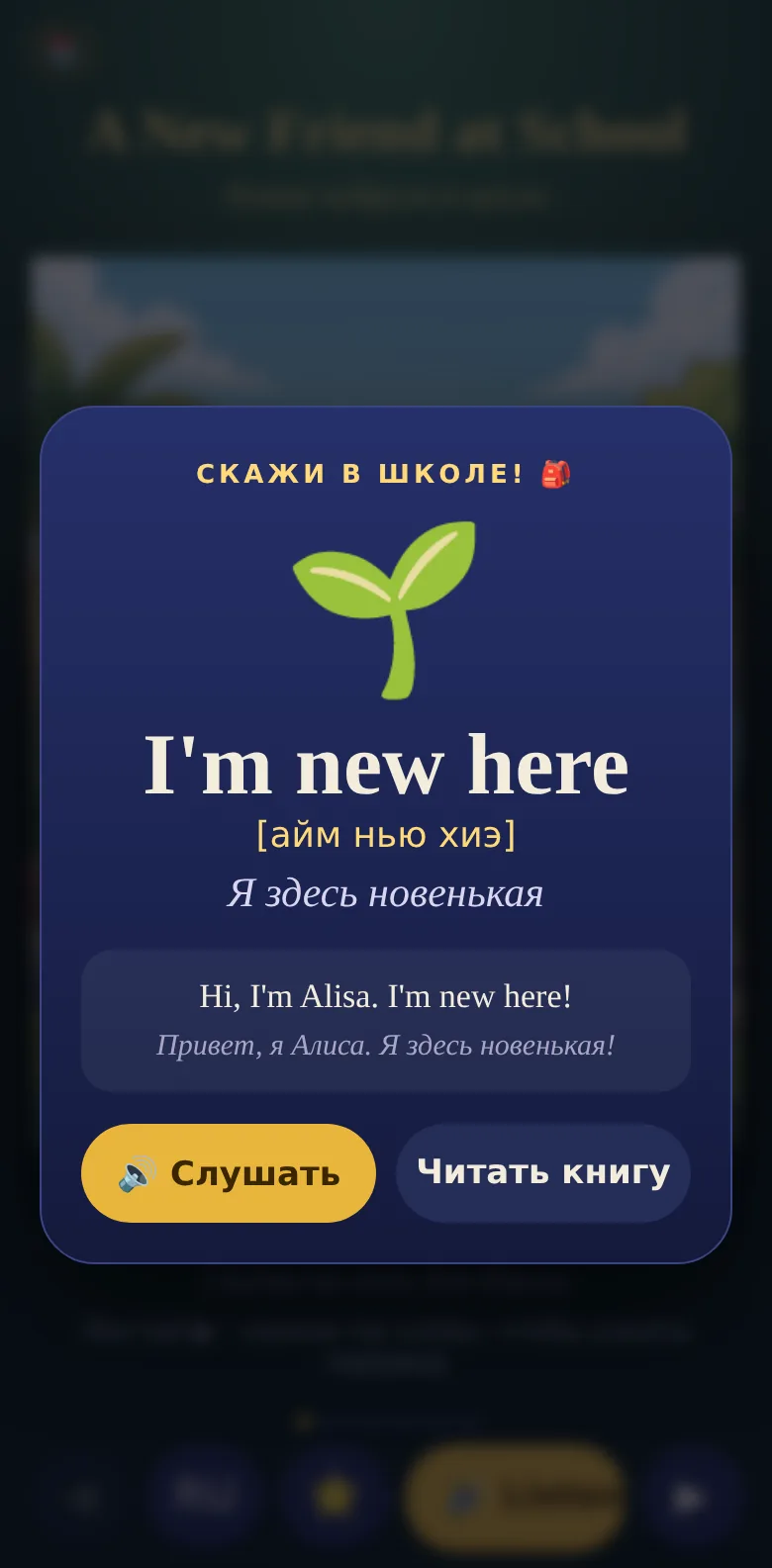
Every book opens with the phrase of the day, under the heading “Say it at school!”: something she can use with her friends tomorrow, how to say it written in Russian letters, what it means and an example.
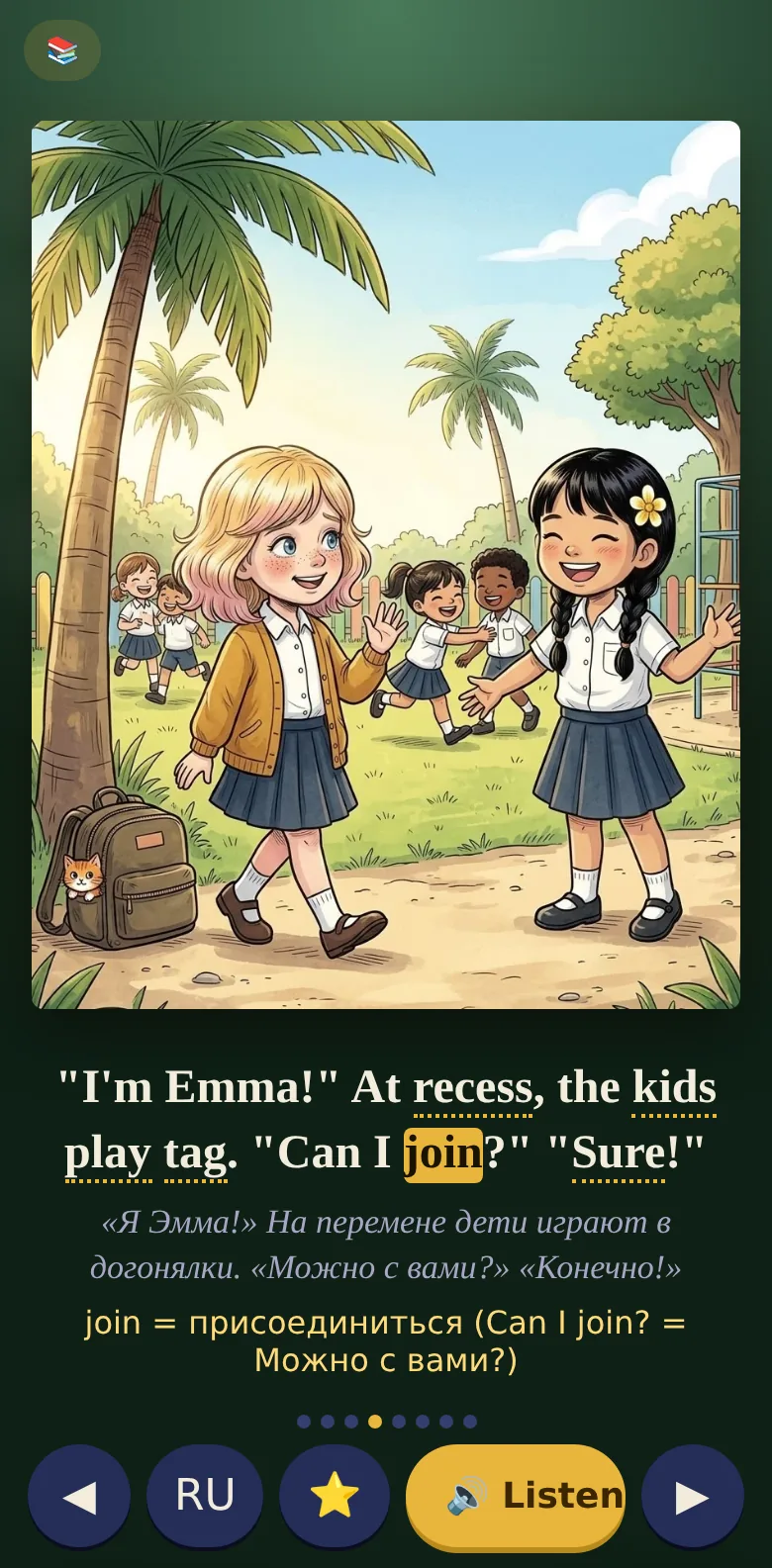
A new book every night, from her own day
Every evening at six, a scheduled job starts Molly. She reads our family chat and turns something from Alisa’s day into the story. Alisa said she likes the ice rink better, and the next book was Pip on Ice. When I asked what she wanted to eat, she shouted “Sushiiii”, and the next book was Pip Makes Sushi. When she admitted she had used a translator, she got The Frog Who Spoke English. On a quiet day, Molly picks what Alisa needs most right now: making a friend at school.
Every book practises five or six phrases she can use at school: Can I join? Sure! Do you want to sit with me? See you tomorrow!
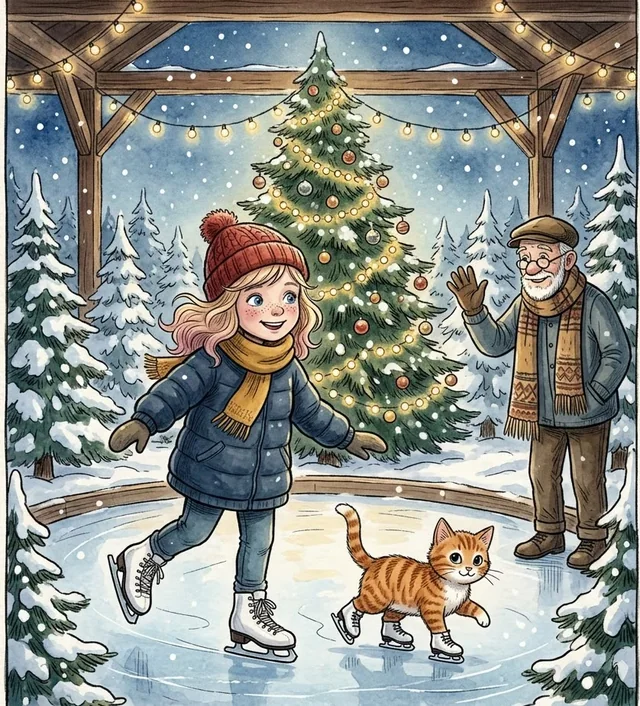
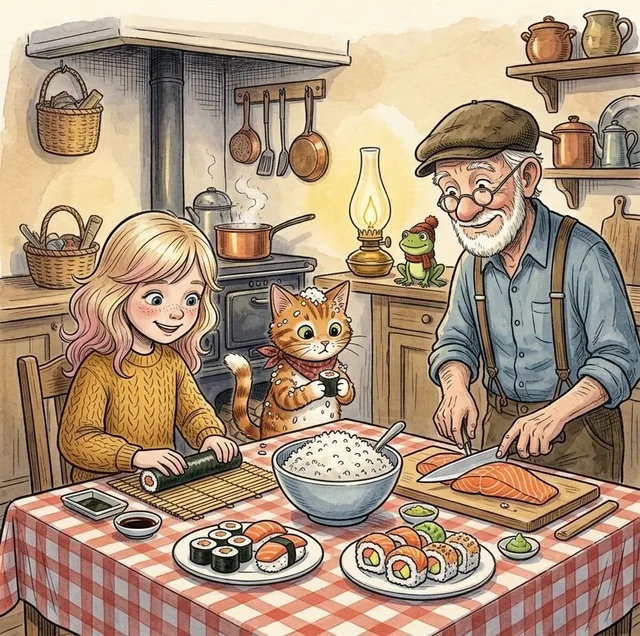
Molly writes the story, draws the eight pictures one by one from the model sheets, and looks at every picture before she draws the next. When a page gets a stranger in it, like an extra frog in a coconut or a rabbit in a suit among the parents, she repaints it. Then she publishes the book at its own link, puts it at the top of Alisa’s bookshelf and posts it to the family chat in three short lines. Every old book stays on the shelf, so we can read them again.
A tutor in the family chat
Molly is in our family WhatsApp group with her own number. She reads along and teaches when there is a moment.
Alisa wanted to say she likes the ice rink more, and a translator gave her “I prefer the ice rink”. Molly told her, in Russian, that it is correct but sounds grown-up, and that kids at school say “I like the ice rink better!” She gave her the pattern, I like ___ better, with two easy examples, wrote how to say it in Russian letters and sent an English voice note. Alisa tried right away:
- ❌ I like better ice rink
- ✅ I like the ice rink better!
Molly praised her first, fixed one thing, the word order, and asked her a new question: the ice rink or the sea?
Sasha’s tips shaped how Molly teaches:
- Keep it short. Kids skip long messages, so Molly writes two or three lines.
- Write sounds in Russian letters. Sasha says they help with the hard words.
- Voice notes in English only. Molly’s Russian accent is terrible, and Sasha told her so.
Every evening at seven the phrase of the day lands in the chat, the same one the book shows, with a slow English voice note:
🤫 Guess what! [гэс уот] = Знаешь что?!
Guess what! I have a cat named Pip! 🐱
When Alisa answers with a translator, Molly says that is fine, and that a copied phrase becomes hers if she reads it aloud three times. When she wrote “I am coming” in the chat all by herself, Molly cheered, and I wrote that she is a fast learner.
Mum learns too
Sasha asked for her own daily English. Molly gave her a short level test, and now she gets an idiom every evening, like “the elephant in the room” or “play it by ear”, with an example and a hard grammar pattern. When it felt too easy, Sasha asked for harder, and Molly raised the level at once. When a rule felt too hard, Molly explained it in Russian and gave her a simpler way to say it that is just as correct.
The GATE parts behind it
- Molly, the AI assistant on GATE. We ask in plain words, in my chat with her or in the family group.
- Picture generation with the model sheets, so the characters stay the same, and repainting when a page goes wrong.
- Web pages at their own link: every book is one, and the bookshelf links them all.
- WhatsApp: Molly is in the family group with her own number, reads along, answers and sends voice notes.
- Scheduled jobs: a new book every evening at six, the phrase of the day at seven.
- Memory: what works for our family stays remembered: short messages, sounds in Russian letters, English voice notes, Sasha’s level.
What it costs
A book has eight pictures and costs about 13,800 GATE tokens to make. The phrase of the day is two lines of text and a short voice note.
Alisa gets a new book every night with herself, Pip and Victor the frog in it, and every evening a phrase she can try at school the next day.
Alisa’s books run on GATE. The assistant is Molly. The stories come from Alisa’s own day.
Common questions
Can AI make personalized bedtime stories that teach a child English?
Yes. Every evening Molly, Victor Wallander's AI assistant on GATE, makes Alisa a new illustrated English bedtime book with her in it. The theme comes from her own day in the family chat, and each book practises five or six phrases she can use at school. Every page has easy English, the Russian underneath, read-aloud and a translation for any word she taps.
How do the characters look the same on every page?
Each cast is drawn once on one sheet: Alisa, Pip the kitten and Grandpa Olle on one, and the family as animals on another. Molly passes that sheet to GATE's picture generation as the model for every new page, then looks at each picture before the next. When a page gets a stray character, like an extra frog, she repaints just that part.
How does the book help a Russian-speaking child read English?
Every page in Alisa's books on GATE shows one or two simple English sentences with the Russian underneath. Listen reads the page aloud and lights up the words as it reads them, tapping a word shows its Russian meaning and says it, and the RU button hides the Russian when she wants to try alone. New phrases come with their sound written in Russian letters.
How is a new book made every night?
A scheduled job on GATE starts Molly at six every evening. She reads the family WhatsApp chat, picks a theme from Alisa's day, writes eight short pages in English and Russian, draws the pictures from the model sheets and checks each one. She publishes the book at its own link, adds it to the top of Alisa's bookshelf and posts it to the family chat.
Can an AI tutor help a child in a family WhatsApp group?
Yes. Molly is in Victor Wallander's family group on WhatsApp with her own number. She reads along and teaches when Alisa tries to say something: praise first, one correction, a pattern to reuse and a small next challenge. She keeps messages to two or three lines, writes sounds in Russian letters and sends voice notes in English only.
Can you use characters like Findus and Pettson in AI stories?
Alisa likes Findus and Pettson, so Molly made original characters with the same cosy feel instead of copying them: Grandpa Olle with his cap and round glasses, and Pip, a ginger kitten in a red neckerchief. Alisa herself is drawn into the same pen-and-watercolour style from a photo, and the family joins as a frog, a swan and a froglet.
Can parents learn English with GATE too?
Yes. Alisa's mum Sasha asked Molly for her own daily English. After a short level test she gets an idiom every evening, such as the elephant in the room or play it by ear, with an example sentence and an advanced grammar pattern. When she asks, Molly explains a rule in Russian and offers a simpler everyday way to say the same thing.
What does an AI bedtime book cost to make with GATE?
A book in Alisa's series has eight pictures and costs about 13,800 GATE tokens to make. The phrase of the day that goes to the family chat every evening is two short lines of text and a short English voice note. The books are web pages, so they open on any phone without an app, and every old book stays on the bookshelf.